Las Cruces Ceilings Fail in Predictable Ways
Spend enough time under Mesilla Valley ceilings and the same handful of problems keeps appearing. Flat-roofed pueblo-style homes shed monsoon water through canales — until a canale clogs or a parapet seam opens, and July's downpour finds the living room drywall instead. Evaporative coolers, still working faithfully on rooftops across the older neighborhoods, drip and overflow into the ceilings below them. Our expansive desert soils swell with rare wet spells and shrink through the dry months, working joint tape loose and opening cracks along seams and wall lines. And in 50-year-old houses, yesterday's shortcuts surface: overdriven screws, sagging half-inch board hung on 24-inch centers, and mystery patches from swamp-cooler cutouts that were never properly closed.
All of it is fixable — properly, not cosmetically. The difference matters, because a ceiling stain painted over without fixing the leak comes back with the next storm, and a crack smeared with caulk telegraphs through again within a season.
What Gets Repaired
Water damage and stains
Soft, sagging, or ring-stained board is cut back to sound material once the roof or cooler issue is resolved, then patched, taped, and sealed with stain-blocking primer so the mark never ghosts through.
Cracks and failing tape
Seam cracks, corner cracks, and wavy lines where tape has let go get re-taped with setting compound — not just filled — so seasonal movement doesn't reopen them by Christmas.
Sags, holes, and old cutouts
Plumbing access holes, ceiling-fan mishaps, abandoned swamp-cooler and flue openings, and sagging panels get real patches: backing, board, tape, and feathered compound.
Texture blending
The repair is only done when you can't find it. Matching the surrounding texture — popcorn, knockdown, or orange peel — is the finishing skill that separates a patch from a repair.
The Repair Sequence
Find the cause, not just the symptom
Every water repair starts with the question "is it still leaking?" If the canale, roof seam, cooler pan, or plumbing above hasn't been fixed, that gets flagged first — there's no point installing new drywall under an active drip.
Open and dry
Damaged board comes out to clean edges, framing gets checked, and anything damp dries fully — fast in our climate — before new material goes in. Hidden mildew on the backside of stained board is common and handled while it's open.
Patch and tape properly
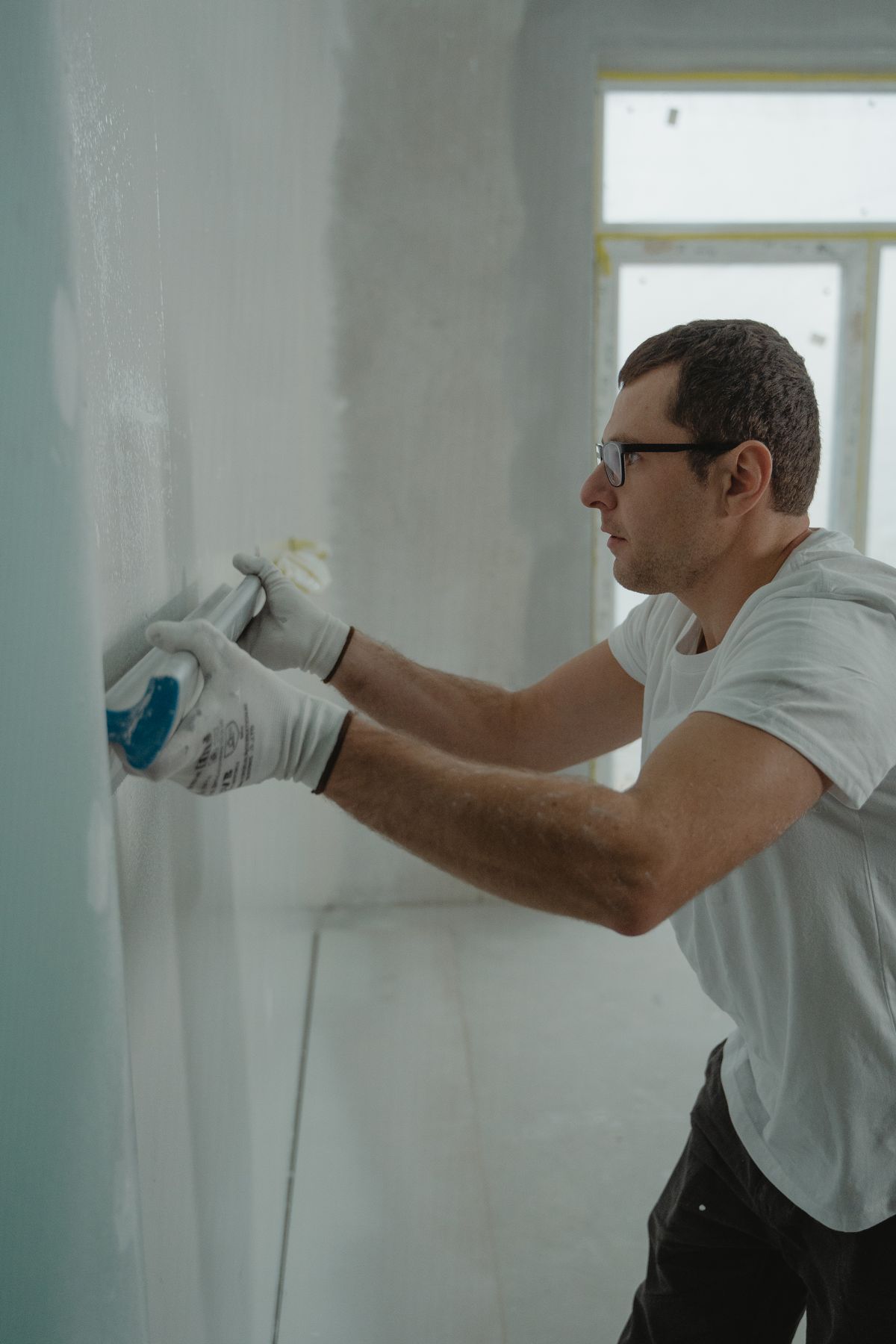
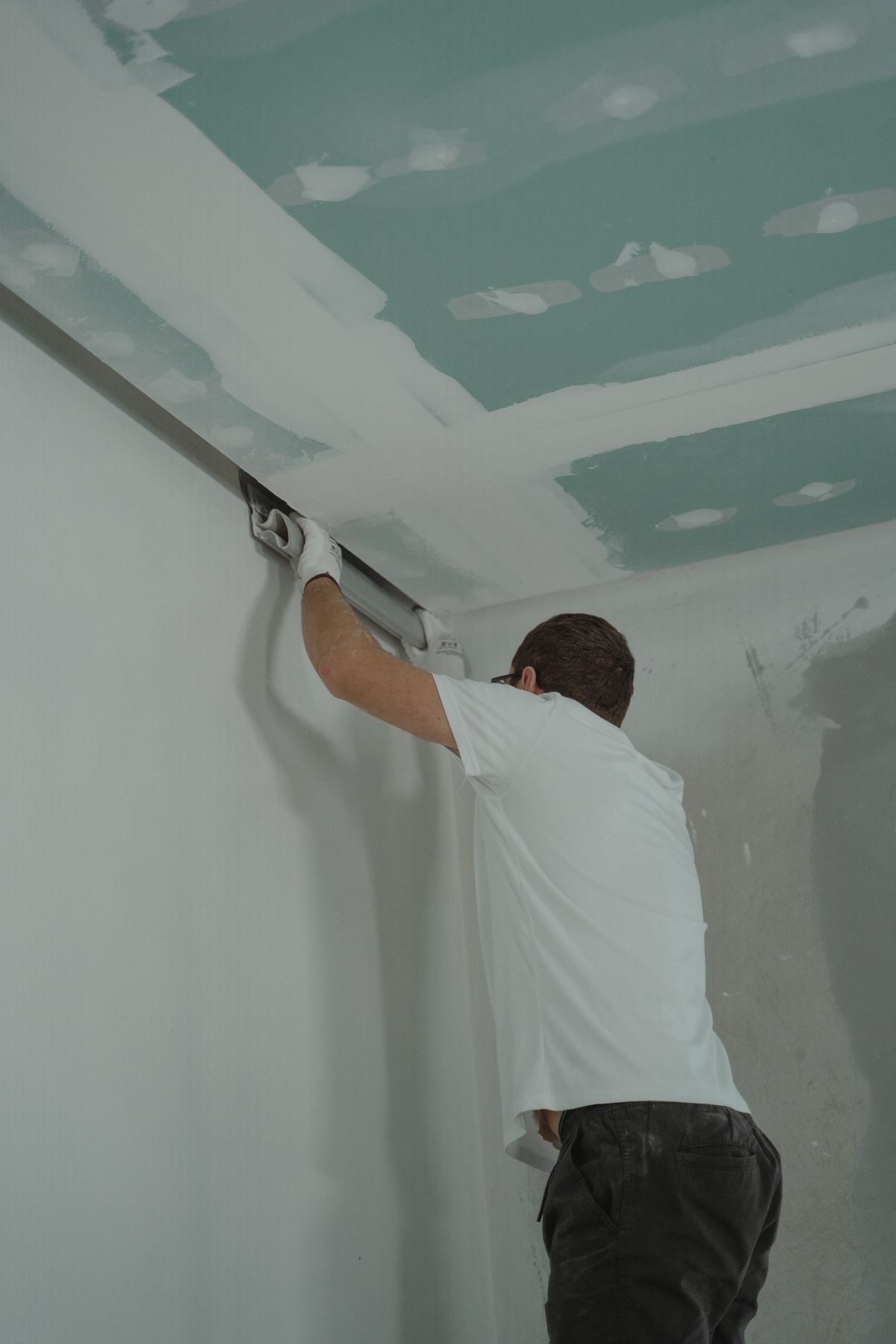
New board on solid backing, tape set in compound, and multiple feathered coats. On older homes the patch is shimmed flush to walls that were never quite flat to begin with.
Texture, prime, paint
Texture blended to the room, stain-blocking primer over any water history, and finish paint across the repair — or the whole ceiling, which is usually the difference between "repaired" and "perfect."
Timing It Around Monsoon Season
If your ceiling damage traces to the roof, sequence matters: roof or canale repairs first, ideally before the July–September storm pattern arrives, then the interior work once everything above is watertight. The attic side gets a look too — wet insulation compresses and stops insulating, and it will keep a stain damp long after the leak is fixed, so soaked batts come out with the damaged board. Homeowners who call in spring get the whole chain done calmly; homeowners who call mid-monsoon get triage first and finish work after the roof proves itself in the next storm. Both are fine — the quote just says so plainly.
Repairing vs. Finally Removing the Popcorn
Here's the practical fork: patching a textured ceiling means paying skilled hands to reproduce a finish you probably don't love, and even a good popcorn match reads slightly off under afternoon light. When a textured ceiling needs meaningful repair, it's worth pricing the alternative — scrape the room, fix everything at once, and refinish it smooth or knockdown. The repair money stops preserving 1978 and starts modernizing the room. A free quote can show you both numbers side by side; on pre-1990 texture, testing comes first either way.
Ceiling Repair FAQs
The stain is dry and old. Can it just be painted?
If the leak is truly fixed and the board is sound, yes — but it needs a stain-blocking primer first, because water marks bleed straight through ordinary ceiling paint. If the board is soft, bowed, or papery, painting is postponing a patch that will only grow.
Do small repairs really need a pro?
A doorknob-sized wall hole, maybe not. Overhead is different: gravity, texture matching, and feathering across raking light make ceilings the least forgiving drywall surface in the house. The giveaway halo around a DIY ceiling patch is practically a local landmark.
Can you match my 1970s popcorn after a repair?
Usually close, with the right hopper and aggregate — but on pre-1990 texture, a lab test comes before any blending work that disturbs the old material. And it's worth hearing the price to remove the room's texture entirely while the tools are out; it's often less than people expect.
My ceiling has a yellow-brown ring that keeps coming back. Why?
Recurring rings mean either an unfixed slow leak (roof seam, cooler line, tub drain above) or a stain that was painted without primer. The repair visit sorts out which — and ends the cycle either way.
Fix the Ceiling, Not Just the Stain
Water damage, cracks, sags, and old cutouts — repaired properly and blended invisibly, with a free quote first.